
Creating your D&D Lore
We all start with one grand idea: the central concept of the world that we have created. That’s the true joy of being a game master or a dungeon master - the fundament of your world, the question at the heart of the cosmos. You’ve dipped your hands into the waters of creation, and now you can start to dive deeper. So, how to go about creating your D&D lore?
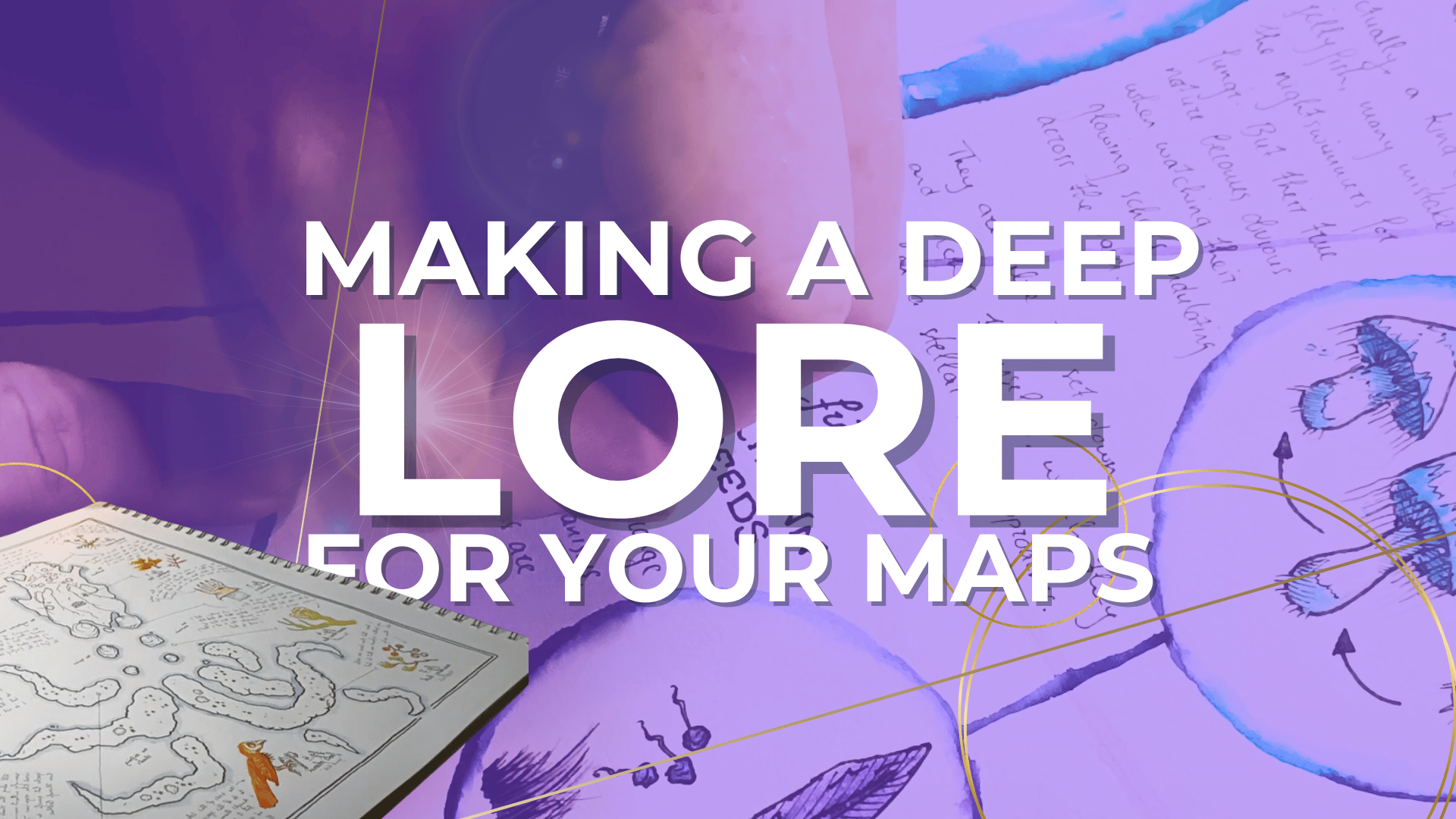
Welcome back to the Red Quills! In our last episode, we delved into the fundamentals of worldbuilding. Today, we'll explore an essential aspect of any fantasy setting—lore. We'll show you how to create a rich backstory for your world and how to visualise it with a special project: a Weathered Handout Map. This map will not only guide your players on a larger quest but also immerse them in the history and culture of your world.
I find maps the best tool to use to both flesh out your worldbuilding and help to explain it in a simple format. After all, isn’t a picture worth a thousand words? If you do it well, and consider all of the details that you are adding in, you will end up with a product that implies answers to questions that you never considered!
This map creation method is also a great tool to make quests that have fun, immersive handouts. Having something like this to give to your players will only increase their enjoyment of the game and give them something to puzzle about and discuss. If you haven’t made a map like this, I can only recommend it.
If you want to watch the full video tutorial on our YouTube channel, you can find it here: Creating your D&D Lore
Or you can download the full A2 version of the map here: The Sunderking's Mappe

So, follow along if you like, or get ready to start thinking about your lore!
_______________________________________________________________________
I’m going to start with weathering the paper, and then using a combination of watercolour and acrylic paints to creating the broad strokes, and finish with ink to crispen the details and add text. As we go through, I’ll talk about how I create lore for my world, the questions that you should consider when creating, and how to make rules to help you to improvise answers to lore questions as you go.
So, let’s talk about weathering.

Crafting the Weathered Map
There’s a thousand ways to weather paper, and a lot of them depend on the thickness of the paper itself, the absorption, the ambient temperature, and - not least - what effect you want to go for. I like to weather using tea: early grey tea, for preference, because I have a lot of this lying around for unrelated reasons. You simply stick the paper on a large metal or glass surface, and drench in tea, allowing to dry over the course of several hours or days.
Other methods tend not to work as well: instant coffee will come out sticky if your consistency is wrong; baking the map will get a great darkening of the edges, but will make the paper crispy; vinegar smells and might make the paper weaker over time.
In my opinion, tea is the best. I also wouldn’t worry about crumpling it or folding it. It will weaken the paper and make it more vulnerable to tearing and ripping. Besides, that will happen with use anyway.
So: a splash with tea, and allow to dry. Do this first, before drawing, because you don’t want your paint or ink to run. This map will look like an ancient relic, leading your players to various significant locations.
Once the paper is dry, we can start designing our map. I’ll do a quick sketch, and we can get started. Now that that’s done, let’s talk about lore.

Starting with a Timeline
As always, creating your D&D lore begins with establishing a solid foundation. The first thing to begin with when you plan things out is a timeline, in one form of another. It doesn't necessarily need to be such an obvious method of history-keeping, but you will need to create your history.
A well-crafted timeline helps to organise your thoughts and ensures that your world has depth and coherence. In this section, we'll explore three key timelines: what really happened (which your world will call history), what they say happened (which they'll call legend), and what should have happened (this is just for you, and is the past's relevance to the present).
Strictly speaking, you only really need the first. But if you're fleshing things out, and you want to take your world from level one to the highest possible levels, then you need to think outside the box. Doing things simply will get the job done simply, and if you want something done well, you need to be the one to do it well.
So, let's talk about these three kinds of timeline.
Timeline One: What Really Happened (History)
The cornerstone of any great lore is its true history. This is where you detail the actual events that have shaped your world. Consider major milestones like the rise and fall of empires, significant battles, the discovery of new lands, and the development of cultures and technologies. This timeline should be thorough and factual, serving as the backbone of your world's lore.
I always begin with the creation of the world - you don't need to give all of the details on the timeline itself, or even confirm that the world was created a handful of millennia ago - just because it is the natural starting point for telling the story of your world. Then I break the timeline up into ages of development: agriculture, travel, coin, smithing, sailing, etc.
Then you can add in the points that you're eager to talk about: the battles, the defeats, the triumphs, the migrations, and all of that. But when making a sandwich, don't forget to butter your bread before you put the filling in.
Timeline Two: What They Say Happened (Legend)
Next, we delve into the legends—the stories passed down through generations. These tales might be exaggerated or romanticized versions of historical events, often infused with myth and magic. Legends add a sense of mystery and wonder to your world, providing depth and color to its history. Think about the heroes, monsters, and miracles that have become part of the cultural fabric.
These are critical to creating a world that feels like it exists even when your players aren't exploring it. It's also a very handy tool to improvise quest lines later. Writing stories, songs, or fables can seem daunting to begin with, but even a few lines to remind you of what the common folk think happened is a great writing tool.
Divide your timeline into ages of myth: ages of heroes, of war, of magic or high knowledge, marked by periods of worship or disaster. It's always fun to move history around to fit into the legends' timeline, or have points in legends that didn't really happen in history. It happens in our world all the time, and the dissonance can create some great plot threads.
Timeline Three: What Should Have Happened (Relevance)
Finally, consider the timeline of what should have happened—the idealized version of history as seen by different factions within your world. This perspective highlights the biases and desires of various groups, revealing conflicts and aspirations. It helps us understand how different peoples view their past and what they believe their future should look like. This timeline can inform the motivations and actions of characters and factions within your game.
But more importantly, it's for you. When you look at what really happened, and ask yourself - as creator - what should have happened, it can give you such a rich soil to plant quests in the modern day. For instance, a battle took place a thousand years ago, and the wrong side won. In the long term, it could even out, but there was a reason that it should have happened, and didn't. There is an imbalance that needs to be altered.
By creating these three timelines, you ensure that your world has a rich, layered history that can inform your storytelling and gameplay. Now, let's move on to bringing this history to life through the conflicts that have shaped your world.

Making a Conflict
Creating a rich and engaging world isn't just about its history and legends; it's also about the conflicts that shape its present and future. Conflict drives the story forward and gives your players something to engage with and resolve. In this section, we'll explore three key types of conflict: those focused on a figure, fighting between peoples, and the idea that there are two sides to every fight.
Focusing on a Figure
A single influential figure can be the catalyst for major events in your world. This could be a tyrannical ruler, a legendary hero, or a powerful mage whose actions have far-reaching consequences. When creating such a figure, think about their motivations, their rise to power, and their impact on the world. How did they come to be in their position? What are their goals? And how do their actions create conflict within the world?
Consider a despotic king who seeks to expand his empire at any cost. His ambition leads to wars, rebellions, and a strained economy. Your players might find themselves opposing him, supporting a rebellion, or perhaps trying to understand and mitigate the reasons behind his harsh rule. This kind of conflict is deeply personal and can drive a compelling narrative.
I’m going to write one for this map: we’ll call him the Sunderking. His true name has been wiped from history. Long ago, he led a rebellion to free the human population from enslavement by a yuan-ti empire. He was beloved, a hero, and after a conflict that lasted decades, he finally succeeded in driving his enemy from their lands and toppling their cities. But that wasn’t enough.
The Sunderking became obsessed with protecting his people at any cost. He slaughtered men, women and children, burned cities to the ground. When he heard that the yuan-ti had an oracle that could read the future, he hunted her down and drank her blood to secure a vision of his own. What he saw only made the madness deepen: he pursued power, made a pact with dark gods, and became a lich. Eventually, he was deposed by his own people.
Fighting Between Peoples
The next type of conflict involves entire groups or cultures clashing with one another. This could be two nations at war, rival city-states, or even different races or species with historical animosities. These conflicts are often rooted in long-standing issues such as territorial disputes, cultural differences, or resource scarcity.
When crafting this type of conflict, think about the history between these groups. What events led to their current animosity? Are there efforts for peace, or are things spiralling towards total war? This type of conflict provides a broad canvas for storytelling, allowing players to navigate complex political landscapes, forge alliances, and perhaps even broker peace.
Take the war between the yuan-ti and the humans in this map. The current Kingdom of Endon is human-dominated, and its history began in the bloodshed of the initial slave revolt. They have a hereditary hatred of the yuan-ti and their empire, the Ssthessic Vrasa, which stems from the injustices that were inflicted upon them.
But the Ssthessic yuan-ti are not all gone. They were driven underground, all hope of escape was taken from them, and they have been forced to eke out a living for centuries in the dark places of the kingdom. They are killed on sight: they are the figures in every scary story told to children. And so they have a hereditary hatred of the Kingdom of Endon and humans, which stems from the injustices that have been inflicted upon them.
Which brings us to the next point.
Two Sides to Every Fight
Remember that every conflict has multiple perspectives. It’s rarely a case of pure good versus evil. Each side will have its own justifications, grievances, and goals. This nuance adds depth to your world and makes the conflicts more engaging and realistic.
Encourage your players to see the shades of grey. Maybe the orcs raiding the human settlements are driven by famine and desperation, not just bloodlust. Perhaps the rebels fighting the empire have noble intentions but use questionable methods. By fleshing out both sides of a conflict, you give your players the chance to make meaningful choices and understand the complexities of your world.
The Ssthessic and the Endonians are an example of this. Once upon a time, it may have been simple to determine who was right and who was wrong. But war has a way of making everyone dirtier by fighting in it. Both sides have noble heroes and terrible murderers. Possibly these are the same figures.
Bringing Conflicts to Life
To bring these conflicts to life, integrate them into your lore and map. Mark significant battle sites, contested borders, and places of historical importance. Use your weathered map to show the scars of past wars and the current flashpoints. This visual representation can help immerse your players in the ongoing struggles and make your world feel alive.
By focusing on key figures, group conflicts, and the multiple sides of every story, you create a dynamic and engaging world. Your players will find themselves drawn into the drama and excitement of these conflicts, making their adventures all the more memorable.
This map has an added challenge: it was made during the reign of the Sunderking, after the fall of the Ssthessic Vrasa. So a human made it, who hates the yuan-ti, and I need to write that into the map and yet make it clear to my players that this is an opinion, and not fact.
They get to choose who was right and who was wrong.
But the map shows the places in the past that held answers, and may yet still hold answers. It promises truth, but delivers opinions. There are contradictions, and if they go to these locations to investigate, they may yet find answers.

Branches and Twigs
As we move deeper into the intricacies of your world, it's time to expand beyond the central conflicts and history. This section focuses on the 'branches and twigs' of your world's lore: the central systems, formative threads, and recurring themes that weave through the tapestry of your creation. These elements add layers of complexity and cohesion, making your world feel alive and interconnected.
Central Systems
Every world operates on a set of fundamental systems that govern its societies and cultures. These systems could be political, economic, religious, or magical. Defining these central systems helps to create a framework for how your world functions and how its inhabitants interact with each other and their environment.
Think about the political structure of your world. Is it a monarchy, a republic, or a theocracy? How do different regions govern themselves, and what are the relationships between these governing bodies? Similarly, consider the economic systems: what resources are valuable, and how are they traded? Are there guilds, markets, or trade routes that dominate commerce?
I’m using the past to inform the present, which lends itself to questions. The kings of Endon claim a direct descent from the Sunderking, and the institution of hereditary monarch has come from him. It hasn’t been reformed in a thousand years, which begs the question: if the Sunderking is such a divisive figure, why hasn’t it changed? Shouldn’t it?
Formative Threads
Formative threads are the key events, cultures, and traditions that shape the identity of your world. These threads run through the history and daily life of your world, influencing its development and the beliefs of its inhabitants. By identifying these threads, you create a sense of continuity and depth.
Consider the cultural traditions that have endured through the ages. What festivals, rituals, and customs are celebrated? How do these traditions reflect the history and values of your world? Additionally, think about the key events that have left a lasting impact. These could be wars, plagues, discoveries, or revolutions that have shaped the collective memory of your world's inhabitants.
In our example, the annual Remembrance Festival in Endon commemorates the fall of the Ssthessic Vrasa and the rise of human freedom. This festival is marked by reenactments, feasts, and rituals that honour the ancestors who fought for liberation. Such formative threads help to create a rich cultural tapestry that players can explore and engage with. More importantly, they can leave clues to facts that the story has forgotten, a connection between history and legend.
In this case, the main Festival is held at the ruins of Tol Fallent in northern Endon. The main reenactment is of the Night of Blood, when the Ssthessic slavers killed the Endonian woman and children as a deterrent to war.
However, the map from the time and the ruins themselves don’t show any slave population kept in Tol Fallent, and the date doesn’t match historical records. In reality, the massacre was of Ssthessic captives by Endonian soldiers, and the story was changed a few hundred years ago to make the Endonians look better.
Recurring Themes
Recurring themes are the underlying motifs and ideas that permeate your world. These themes can be moral, philosophical, or symbolic, and they provide a cohesive thread that ties together different elements of your lore. Identifying these themes helps to create a unified vision for your world.
Consider themes such as the struggle for freedom, the corruption of power, or the conflict between nature and civilization. How do these themes manifest in the history, culture, and conflicts of your world? Recurring themes add depth and resonance to your storytelling, making your world more compelling and thought-provoking.
In the Kingdom of Endon, the recurring theme of liberation versus oppression is ever-present. The history of slavery under the Ssthessic Vrasa and the subsequent rise of the Sunderking reflect this theme. Even in the present day, tensions between the ruling class and the common folk, and the remnants of the yuan-ti, echo this ongoing struggle for freedom and justice.
Weaving the Branches and Twigs
To bring these elements to life, weave them into your narrative and map. Show how the central systems influence daily life and major events. Illustrate the formative threads through cultural landmarks, festivals, and historical sites. Highlight recurring themes in the conflicts and choices your players encounter.
By fleshing out the branches and twigs of your world, you create a dynamic and immersive environment that feels real and lived-in. Your players will appreciate the depth and coherence of your world, and their adventures will be enriched by the layers of history, culture, and meaning that you’ve built.
With these elements in place, your world is ready to offer countless stories and adventures. Now, let’s bring everything together and conclude our journey through the creation of D&D lore.
________________________________________________________________________

And there you have it – a weathered, lore-rich map ready to lead your players on an unforgettable adventure. Remember, a great map is more than just geography; it's a gateway to stories, mysteries, and endless exploration.
If you enjoyed this video and found it helpful, please give it a like and consider subscribing to our channel. By subscribing, you'll be notified whenever we release new content, ensuring you never miss an update. Also, don’t forget to check out our page for other videos on specific map styles and techniques. As a member of the Red Quills, you'll gain access to exclusive Q&A sessions, topic boards, and high-quality copies of the maps created in these videos.
Stay tuned for our next video, where we’ll delve into the deeper aspects of worldbuilding – creating cultures, myths, and legends that will make your world truly come alive.
Thank you for joining me on this journey. Your support and engagement are what make this channel possible, and I’m excited to see the incredible maps you create. Until next time, happy mapmaking!