
Creating your D&D Worldbuilding
Your players are going to wander away from the prepared area! It's the big fear for new DMs, when you're just starting out, and it's a common question that comes up again and again - how do we stop our players from going wandering? Creating your D&D worldbuilding can be the biggest challenge. After all, it's a role-playing game: it's supposed to give them the opportunity to do whatever they want. And maybe they will want to head away from the plot points and check out what's on the other side of the hill.
But what if you haven't put anything on the other side of the hill?
So welcome to this latest episode of the Red Quill's Guide to World Design - today, we're talking about the generative ideas that you can use when creating your world to alleviate some of that 'exploration anxiety'. When your players go a-wandering, you can have something prepared and take it in your stride.
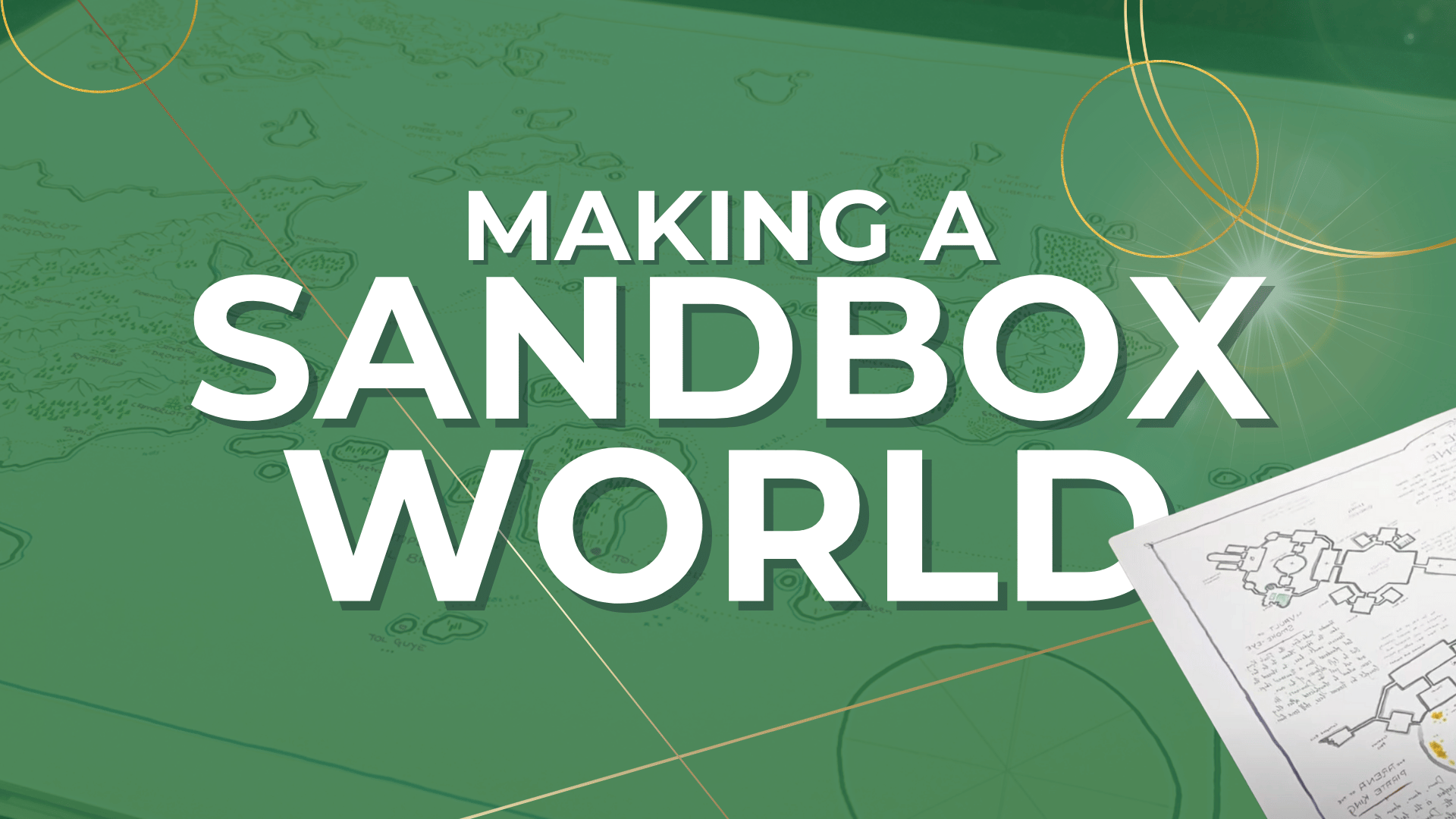
Last week, we talked about Creating a D&D Map, and this week we're going to do something similar. As usual on the Red Quills, I'm going to demonstrate my personal preference for prepping some ambient worldbuilding - a map! And I'll tie in the concepts that we're talking about to show how you can do it too.
I'll go through and show the process for creating a worldbuilding map as I go, from my latest video, which you can watch here: Creating your D&D Worldbuilding
If you want to download the full map, you can find it here: The Civil War

So, without further ado, let's talk a little more about the 'first-time DM' jitters.

________________________________________________________________________
There's a lot of different advice floating around for first-time dungeon and game masters - and it generally falls into one of two categories: either "Prepare Everything!" or "Prepare Nothing!". And that's based on how experienced DMs have figured out how they work. I'm sure that you will come up with a method that works for you in the long term, but for now, we're going to give you some tools to help you determine your style.
When you're starting out, the trick is 'broad strokes, with the appearance of detail'. Let me explain.
Broad Strokes, With the Appearance of Detail
When creating a fantasy world, it's essential to focus on broad strokes that convey the appearance of detail without requiring exhaustive preparation. This approach will allow you to establish overarching themes and rules that can be applied to smaller scales, enabling confident improvisation while maintaining consistency.
Thematic rules are fundamental principles that govern your world, such as the presence of magic, societal norms, and technological levels. These rules provide a framework to ensure coherence across different scenarios.
So let’s take a look at some world themes:
Themes and their Rules
When you create your world, the first thing to remember is that it’s not just your world. It’s your players’ world as well. Creating a fun, immersive and explorable world is about inviting additions and improvisations to it. And that can be a bit daunting for a first-time DM, especially one that has heard some horror stories about nightmare players, but that’s why it’s important to establish expectations early on, and you can go a long way by establishing your theme.
Themes within fantasy worlds always tend to be inspired by whatever genre of film or book you like to read, and they’re always fairly poorly named. What’s the difference between high fantasy and low fantasy? Are fantasy and sci-fi really genres in their own right, or are they just settings? Who cares!
The important questions are these:
- How defined is good and evil? The conflict between the two is a staple in fantasy, and how easy it is to tell the difference is honestly the major factor dividing realism and fantasy proper.
- Is the world more defined by its past, or its future? Which is really a question about history or innovation. This is the divide between a world dotted with ruins and secrets from the past, or a steampunk setting.
- Are most people basically selfish or selfless? I’m sure everyone has a different take on this, but it’s your world. It’s important to remember that when you make up characters on the fly, no matter how self-aware you are, your biases will creep in. It’s important to know what those are ahead of time.
You have the opportunity to explore other things as well, but these three questions will help you to define a world that exists even when your characters aren’t around. And that’s the difference between a boring world and a boundless world.
Creating a Map
So, you have some basic rules. Now, we make a map. Literally, in this case, but it can be metaphorically. You have these rules, and they can help you as you map things out. Ruins or factories, the lands of evil overlords or good defenders.
If players venture into an unknown town, quickly apply cultural norms and technological levels to create a believable setting. Involve players in worldbuilding by allowing them to add details within the established thematic rules, such as describing their character's hometown. By establishing broad thematic rules, you can create a consistent and immersive world, confidently handling player explorations and generating engaging settings on the fly.

Making your World Rules
Now that you've got the broad strokes and themes in place, it's time to dive into the nitty-gritty: making the rules that will govern your world. These rules are the backbone of your setting, ensuring that everything feels cohesive and believable, no matter where your players wander.
Rules are essential for maintaining consistency and immersion. Think of them as the underlying physics of your world. When you have clear rules, you can confidently improvise details, knowing they will fit seamlessly into the larger picture.
Let's break down the types of rules you'll want to consider:
- Magic System
Define how magic works in your world. Is it rare or common? Are there different schools or types of magic? What are the costs and limitations? In a world where magic is rare, only a select few individuals might wield it, making them revered or feared. Magic items are valuable and scarce, and casting spells could have significant consequences.
- Technology Level
Decide on the technological advancement of your world. Are they in a mediaeval era with swords and castles, or is it a steampunk setting with steam-powered machinery? In a mediaeval setting, transportation relies on horses and carriages, and communication is done through messengers or magic. Weapons are swords, bows, and crossbows, with no firearms or advanced machinery.
- Societal Norms
Establish the cultural and societal norms. What are the major religions, traditions, and social structures? How do people view honour, loyalty, and other virtues? In a society where honour is paramount, breaking an oath might result in severe punishment or social ostracism, while loyalty is highly rewarded and celebrated.
This is also the opportunity to consider the other concepts that you want to explore in your world: classism, racism, capitalism, etc. Remember, though, that it’s not the DM’s role to lecture about your opinions. The fun part of playing these concepts is in the exploration: you just provide the questions, not the answers.
By creating clear, consistent rules for your world, you lay a strong foundation that makes improvisation easier and ensures your setting feels immersive and coherent. These rules help you maintain the appearance of detail and depth, even when you're making things up on the fly. So, take some time to define your world's magic, technology, and societal norms, and you'll be well-prepared for whatever adventures your players throw your way.

Three Layers of your World
Now that we’ve established the broad strokes and the rules that govern your world, it’s time to delve deeper. We’re going to break your world down into three layers: the cosmos, the realm, and the locality. Each layer adds a different level of detail and helps you create a world that feels expansive and alive, even if you’re making it up as you go along.
The Cosmos
The cosmos is the grand, overarching layer of your world. This is where you define the gods, the history of the world, and the theme of your campaign. Think of it as the backdrop against which all your stories play out.
- Gods and Religion: Who are the gods of your world? What are their domains and how do they interact with mortals? Are they distant, unknowable beings or do they walk among the people?
- World History: Outline the major events that have shaped your world. Wars, cataclysms, the rise and fall of empires – these are the stories that have left their mark on the land.
- Campaign Theme: Decide on the central theme of your campaign. Is it a tale of good versus evil? A struggle for survival in a harsh world? This theme will help guide your storytelling and provide a consistent tone for your adventures.
The Realm
The realm is the middle layer of detail. Here, you focus on the kingdoms, empires, and the major conflicts of the mortal world. This is where the politics, wars, and the ebb and flow of power come into play.
- Political Landscape: Who are the rulers and what are their ambitions? What are the major political factions and how do they interact?
- Conflicts and Wars: Detail the major conflicts that are currently shaping your world. These can provide ready-made plot hooks and add a sense of urgency to your adventures.
- Magic and Society: How does magic influence society? Are there powerful mage guilds, or is magic tightly controlled by the ruling elite?
The Locality
The locality is the most immediate layer of detail. This is where you zoom in on the everyday lives of the people in your world. It’s where your players will spend most of their time, so it’s important to make it feel rich and vibrant.
- Communities and Characters: Flesh out the towns, villages, and cities where your players will adventure. Create interesting NPCs with their own goals and personalities.
- Local Concerns: What are the everyday problems that people face? Bandit raids, crop failures, local feuds – these small-scale issues can be just as engaging as grand, world-spanning conflicts.
- Cultural Details: Add flavour to your world with cultural details. Festivals, traditions, local cuisine – these little touches can make your world feel lived-in and real.
By breaking your world down into these three layers, you can create a setting that feels both grand and intimate, a place where epic stories can unfold and personal dramas can play out. This layered approach helps you keep track of the big picture while also providing plenty of detail for those moments when your players want to explore every nook and cranny.

Keeping Quest Themes on Hand
With your world thoroughly outlined across its three layers, it's time to focus on the lifeblood of any campaign: the quests. Having a range of quest ideas ready can help you keep the adventure moving smoothly, no matter what direction your players decide to take. In this section, we'll talk about generating quest ideas on the fly, understanding the different types of quests, and tying them into your world’s lore.
Generating Quest Ideas Off the Cuff
One of the most valuable skills for a DM is the ability to come up with quest ideas on the spot. Your players are unpredictable, and sometimes, they'll head off in a direction you didn't expect. Here's how to stay prepared:
- Think Small: Not every quest needs to be epic. A local farmer might need help with bandits, or a merchant might hire the party to protect their caravan.
- Use Your World Rules: Lean on the rules and themes you’ve established. If magic is rare, maybe a quest involves finding a lost spellbook. If honour is paramount, perhaps the quest revolves around restoring someone’s tarnished reputation.
- Player Backstories: Incorporate elements from your players’ backstories. This not only makes the quests more engaging but also helps tie the characters into the world.
Types of Quests
Quests come in many flavours, and mixing them up can keep your campaign fresh and exciting. Here are some common types:
- Combat Quests:
These quests focus on battles and physical challenges. For example, clearing out a nest of goblins threatening a village, or protecting a fortress from an impending attack. They are often the meat-and-potatoes of a role-playing game, particularly in Dungeons and Dragons, where the majority of the rules are geared towards combat.
- Puzzle Quests:
These require players to solve riddles or navigate complex situations. For example, deciphering an ancient map to find hidden treasure, or figuring out how to disable a series of magical traps in a dungeon. These require your players to think - and it doesn’t have to be a written puzzle or a riddle. It could simply be a matter of having to use their brains at all, finding a solution outside the box.
- Role-Play Quests:
These emphasise interaction with NPCs and making decisions based on dialogue.You might have them negotiating a peace treaty between two warring factions, or convincing a reclusive wizard to help with a dire problem. These are my favourite kinds of quests, but they can be a little intimidating for first-time DMs. Remember to have fun and play things loosey-goosey.
- Moral Dilemma Quests:
These challenge players with difficult choices and ethical quandaries, like deciding whether to save a town from a plague by sacrificing a few innocents, or choosing between two equally deserving parties in a dispute. I myself have used these many times - my players have been faced with choices between going along with easy but evil paths or hard but morally good paths all the time.
Tying Quests into the Lore
To make quests feel meaningful and integrated into your world, tie them into the lore and themes you've established:
- Historical Context: Reference past events or figures in your quests. Maybe the quest revolves around finding a relic from an ancient war or solving a mystery connected to a legendary hero.
- Factions and Politics: Involve the political landscape. Quests could impact the balance of power between factions or advance the goals of a particular ruler.
- Cultural Elements: Use cultural details to enrich your quests. Perhaps a festival is the backdrop for a mystery, or local traditions provide clues to solving a puzzle.
By keeping a variety of quest themes on hand and tying them into your world's lore, you can ensure your campaign remains dynamic and engaging. Whether your players are fighting off goblins, solving ancient puzzles, engaging in intricate role-play, or facing tough moral choices, you'll be ready to guide them through a rich and immersive adventure. Remember, the goal is to create a world where every quest feels like a natural extension of the setting, drawing players deeper into the story with each step they take.

________________________________________________________________________
And with those rules in your back pocket, as well as a print-out of some random names for you to give to the NPCs that you make up as you go, you should be ready for any off-book shenanigans from your friendly neighbourhood chaos gremlins. The important part is, of course, to remember to have fun and don’t be afraid to take your time. Talk to your players about what you expect and what they expect: you’re all there to have fun.
So, we’ve come to the end of Creating your D&D Worldbuilding, I hope that you found this video useful. If you did, you can check out some more of the concept videos and tutorials on our Red Quills channel.
Once again, thank you to the wonderful community that we have: we’re just starting our memberships and our Discord server to discuss all things maps - the link is in the description below! As always, if you have any questions, chuck them in the comments below. Any likes and subscribes to help the channel are very welcome.
Stay tuned for next week’s video, which is all about creating some lore for your worlds! See you soon, adventurers!