
The Guide to the Undercity
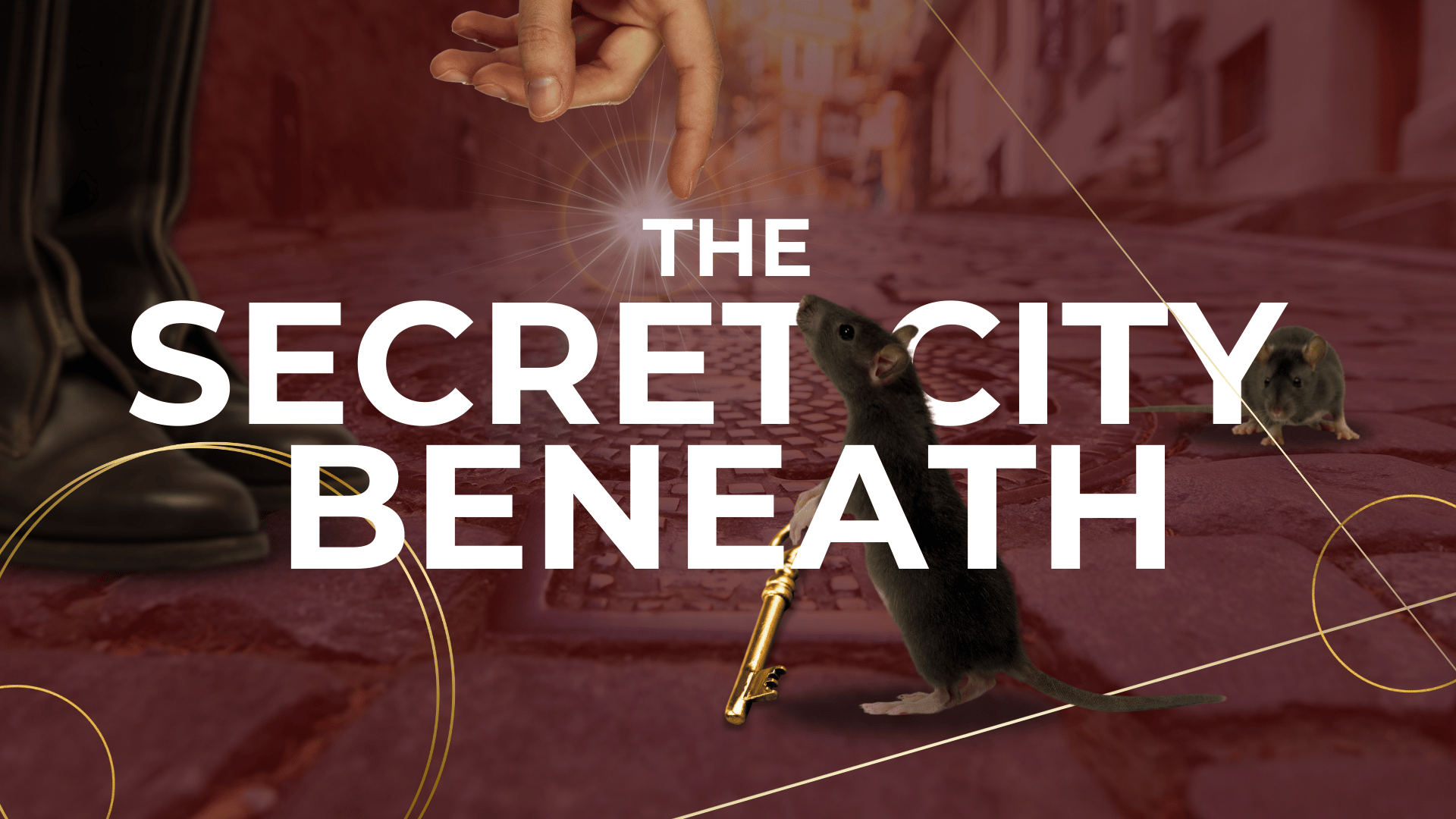
You are tramping quietly through the marshy soil, as the tendrils of shadow curl around you. Here and there, the sounds of scratching footsteps echo down the tunnels as small creatures move throughout the maze. As you hold the spluttering torch overhead, you press a cloth to your face and lean in to read the inscription on the wall - after all, you don’t want to breath the air down here freely. Welcome to the tunnels and chambers of the Undercity.
Hello, adventurers, and welcome back to the Red Quills for this final episode in our latest series The Red Quills Guide to Fantasy Lands. We’ve spent the last six weeks exploring some of the iconic kinds of settings that you can touch on in your fantasy games and stories - from the peaceful lands of the halflings to the strange wilds of the fey, from sunken ruins to the Underdark. And now fresh from our sojourn into the Astral Plane, we land in the rather smelly chambers of the undercity.
If you would prefer to watch the tutorial video instead, you can check it out here: The Guide to the Undercity
Otherwise, you can download the full A2 map here:

Since our very popular megadungeons video, we’ve had a lot of interest in doing a follow up on that same topic, looking especially at some different specifics of the process: the multi-level methods, the isolinear style, the filling and substance, and some questions about the fauna and flora. That second video - Megadungeons II: Even More Mega - is coming, but I’m doing some of my own experimentation in this video on a different style of map.
So, you can hold onto your horses until Megadungeons II: Even More Mega comes out, but if you want some insights into the process and my own experiments, this video will help, and will more specifically delve into the setting of the Undercity - the warren of tunnels that can be found under large cities.
Now, grab your quills and paper, and hold onto that torch… We’re heading down into the Undercity.
________________________________________________________________________

We’re going to start as we always do, with a large blank sheet of A2 paper. We’re going with a thickness of 180gsm for these maps - I’ll put the list of materials in the description below - as it’s a good ratio of thickness to size. Using watercolours means that you will need thicker paper to absorb the water properly. I’m using paint on this map to give an extra aesthetic appeal, but the main map part is almost entirely inked, so you don’t need to.
So, let’s start with: how to create your own undercity map.

Creating your Own Undercity
First, you can begin by lightly sketching the main layout of our undercity. Think about the overall structure - will it be a maze-like labyrinth, a series of interconnected chambers, or a combination of both? Start with the major pathways and chambers. Use light pencil strokes so you can easily adjust as needed.
As you draw, consider the flow of the undercity. Where are the major entrances and exits? Are there any significant landmarks such as a central market, a hidden temple, or a guarded treasure room? On this map, I have labelled several, both from previous adventures I’ve run, and from things I’d like to do. Crypts, thieves’ guilds, vampire’s lairs, they all add to the metropolis beneath the metropolis.
One of the unique aspects of undercity maps is the verticality. These maps often have multiple levels stacked on top of each other. I’ve used this isolinear style to show the layers, but you can simply do them one over the other, like in a building plan. I do something like that in my Heist Map tutorial.
Consider how these levels connect. Are there staircases, ladders, or hidden passages? How do the inhabitants move between levels? I’ve connected specific chambers to their counterparts on different levels, and each of them implies a different method of moving to and from the surface. The arena, for instance, extends all the way down, but that warren of chambers is its own issue - while you could use the drainage tunnels, which are considerably more difficult to maneouvre through.
Now, let’s add some environmental details. Think about what makes the undercity unique. Is it damp and moldy with water dripping from the ceiling? Are there ancient inscriptions on the walls or glowing mushrooms providing light? I’ve been sparing on written details like that on this map, but that’s why I’ve added the watercolour. It’s no accident that I’ve used brown paint, and smudged it.
Once you’re satisfied with your pencil sketch, it’s time to ink the map. Use a fine-tipped pen for the main outlines and a thicker pen for the borders and major pathways. Take your time with this step to ensure clean, precise lines.
Inking can be a relaxing process, but it requires patience. Make sure your hand is steady and take breaks if needed. After inking, you can erase any remaining pencil marks to keep your map looking neat.
I’ve used a specific bubble-like style here for the tunnels and a stippling style for the city to imply the massive amount of detail without spending days on one piece of paper, but there are any number of styles that you can use. If you don’t like this particular one for the tunnels, you can check out the Adventure Map tutorial for another style of tunnels.
With the main elements in place, it’s time for the final touches. Add any labels or annotations to help identify key areas. You can also include a legend or key to explain any symbols or markings you’ve used.
I keep these naturalist maps very free of legends or symbols, and try to pare down the number of labels to stop them from getting too complicated - although that’s an issue that comes up regardless. But give yours some thought: each of the maps in this series is a different style, with all that unites them being the sketches of flora and fauna in the borders. There are six individual mapmaking methods here, all of which are different from the standard top-down stylised fantasy map. What are you trying to convey? How can you imply or add details by choosing the right style?
Such choices can certainly help you establish an aesthetic for the setting, quite apart from anything else.

Wretched Hives of Scum and Villainy
Now that you’ve begun to create your undercity, let’s explore it a little bit. All cities have some element that’s buried beneath the surface - it could be for a variety of reasons. It may not be because their activities are criminal, but rather because they prefer the quiet and the dark to conduct their activities. As I say it, I realise how suspicious that sounds, but still. Perhaps the practical classes of the local magical academy go down there, or the beggars have their court, or the arena fighters have their training rings.
Thieves and their Guilds
The undercity is a natural habitat for thieves and their guilds. These secretive organisations often control large portions of the underground network, using it as a base for their operations. Consider where these thieves might gather. Are there hidden doorways or secret passages leading to their lairs? Marking these on your map can add layers of intrigue for players or readers. Thieves’ guilds often have areas for training, storing stolen goods, and planning heists. These elements can be represented with symbols or annotations.
Use unique symbols like a dagger or a lock to represent guild areas. Incorporate secret entrances and hidden tunnels, and maybe add some shaded areas to indicate their covert nature. Think about access to the surface, proximity to valuable targets, and the need for secrecy. Placing them near trade routes or wealthy districts can make for interesting plot points.
Beggars, Fighters, and Black Markets
The undercity isn't just home to thieves. It's also a refuge for society's outcasts – beggars, fighters seeking underground arenas, and black markets where anything can be bought or sold. These areas can be bustling hubs of activity, filled with makeshift homes, hidden taverns, and clandestine trade spots. Depicting these on your map can help bring the undercity to life. Think about the flow of people and goods, and how these elements interact within the confined spaces of the tunnels.
You can use symbols like a coin or a stall to indicate market areas. Consider adding pathways that lead to and from these spots, showing the flow of illegal trade. You can depict an arena with circular or oval shapes, and include stands or seating areas. Adding symbols for weapons or trophies can highlight its purpose.
Creatures of the Darkness
No undercity is complete without its share of strange and dangerous creatures. From giant rats to monstrous aberrations, these beings can make exploring the undercity a perilous task. Marking their territories and lairs on your map can add an element of danger. Use different symbols or colours to indicate areas that are particularly hazardous.
In this undercity, a vampire - Olivyr - has made a corner of the undercity his own. He controls everything that moves through it, and across the river, and thus has considerable power over the city above, though they do not know it. The creatures beneath the city are often less intelligent than those above, but not necessarily.
Crypts and the Undead
The undercity often intersects with ancient crypts, where the dead are not always at rest. These crypts can be sprawling complexes filled with traps and undead guardians. Highlighting these areas on your map can set the stage for thrilling encounters. Consider adding details like hidden passages, cursed artefacts, and symbols of old religions to enhance the atmosphere.
Use symbols like crosses, tombstones, and bones. Adding descriptions of eerie features like flickering torches or ancient runes can enhance the atmosphere. Traps like collapsing floors, poisoned darts, and hidden pits are common. You can represent them with specific symbols or annotations on your map.
Sewers and Swamp Creatures
Sewers are a common feature of the undercity, often home to all manner of swamp creatures. These areas can be mapped out with intricate details showing the flow of water and waste. Depicting the slimy, treacherous paths through the sewers can add a gritty realism. Mark where dangerous creatures lurk, and show how they interact with the environment – for example, near sources of waste or in dark, flooded chambers.
Use wavy lines to show water flow and different shades to indicate depth and filth. Mark key locations like drainage points and access hatches. You can encounter all sorts of mundane and magical creatures in the sewers of a city. Rats, alligators, oozes, and even mutated creatures can make sewers their home. Depict their lairs and hunting grounds with distinctive symbols.

Cities and their Forgotten Foundations
Before we move on from planning out your undercities, I want to talk a little more about the concepts involved when you explore the chambers and the tunnels beneath cities. It is easy to add some ideas to your plan, such as sewer tunnels or thieves’ hideouts, but allow yourself to come at the problem from a different angle, to think a little more deeply about it.
Sewers are an excellent addition to any undercity, and you should definitely use them. But there are other options too - old buildings that have been buried by the passage of time and forgotten. Maybe some of the old chambers have been rediscovered in the modern day by some criminal enterprise, or archaeologist. Perhaps there are extensive crypts beneath the palace or the richer suburbs, trapped to defend against graverobbers.
There are other questions too: how do you deal with flooding? Does the tide impact on the sewer system in a coastal town? What used to live in the area, and has been displaced to the forgotten corners of the city?
Mapping out Drainage
The undercity often includes elaborate drainage systems. Mapping these can be a complex but rewarding task. Show how the water flows, where it pools, and how it drains away. This can help players understand the layout and navigate the tunnels. Drainage systems can also provide clues to hidden areas or forgotten passages, adding depth to your map.
Use arrows to indicate water flow direction and different shades of blue to show water depth. Highlight areas where water pools or drains away. Additionally, you can depict secret doors or passages accessible through the drainage system. Use dotted lines or hidden symbols to indicate secret routes.
The Old Buildings, Now Buried
As cities grow and evolve, old buildings are often buried beneath new construction. These forgotten foundations can become parts of the undercity. Mapping these buried structures can reveal the history of the city above. Highlighting remnants of old architecture, like crumbling walls and ancient doorways, can add a sense of age and mystery. These areas might also be home to relics or secrets from the past.
Use faded lines or shaded areas to depict old structures. Annotate with notes about their original purpose and current state. You can find all sorts of old buildings in the undercity, such as old temples, forts, houses, and markets. Each can offer unique challenges and stories for adventurers.
The Domain of the Dead
The undercity is often a place where the dead are laid to rest, intentionally or otherwise. Mapping out cemeteries, catacombs, and tombs can add an eerie aspect. These domains of the dead are often filled with traps and the restless spirits of those interred. Adding symbols for burial sites and detailing their layouts can create a hauntingly beautiful map.
Use symbols like skulls, bones, and crosses. Darker shades can indicate depth and danger, while annotations can describe notable features.Consider using traps - left to deter graverobbers - to make these areas a little more exciting. Common traps include hidden pits, swinging blades, and collapsing ceilings. Use specific symbols and annotations to indicate their presence.
Flooding Beneath the Soil
Flooding is a common hazard in the undercity. Mapping out areas prone to flooding can help navigate these treacherous regions. Use different shades of blue or wave patterns to indicate water levels. Show how flooding affects different areas and the pathways it creates or obstructs. This can add a dynamic element to your map, as players may need to contend with rising waters.
Use wavy lines and different shades of blue to indicate water levels. Mark areas that are submerged or at risk of flooding. Think about access and escape routes, how flooding affects movement, and any natural barriers or shelters. This can add strategic elements to your map.

Flora and Fauna of the Undercity
Now, we come to the discussion of the flora and fauna found in the undercity. This will obviously vary hugely based on your world, the setting, the climate, the history, and all of that, but I’ve made six examples of things that you can find here in this undercity.
It’s worth noting that I’ve also added pomegranate trees to the list of flora and fauna. That is not a homebrew tree, with one notable addition. In my stories, as a nod to Greek mythology, there are specific varieties of pomegranate trees that grow in the Underdark. They do not require light to thrive, and instead subsist on ambient magic.
The other creatures are all made specifically for this map. I’ve added in some details that will help an explorer to plan for them, and for a dungeon master to create obstacles or puzzles out of them.
Psilogair Fungus
The Psilogair Fungus is a bright red, luminescent fungus that thrives in the damp, dark environments of the undercity. Like some reptiles or fish, they will grow to suit their container - remaining as small as three inches tall, or up to 20 feet in height. They are used for light, but can give off a puff of hallucinogenic spores if disturbed.
It’s also sometimes called Willowkin, because it will relieve pain if chewed. Many urban alchemists use it in their brews, and will wander down into the sewage tunnels to gather it. But it is considered unclean by the superstitious, so that fact is not widely publicised.
Collir Newts
Collir Newts are large, amphibious creatures that inhabit the wettest parts of the undercity. They lived in the wetlands that one spread across the strait, but were forced away when the city expanded. Now, they can be found in drainage areas or near underground water sources.
In particular, they provide an obstacle for the workers at the Bath houses of the city, because the warm waters of the baths are perfect for the newts’ eggs. They will fiercely defend their young, too, so clearing the newts out of the tunnels annually is a fairly risky job for someone unskilled at defending themselves.
The Rat King
The Rat King is a mythical creature said to rule over the countless rats of the undercity. Mapping its domain can create a sense of foreboding and danger. Indicate areas heavily infested with rats and the possible lair of the Rat King. This creature can be a major antagonist in your story, with its influence felt throughout the undercity.
In my case, the Rat King is a rodent with an unusual gift: it has the inherited memory of every Rat King that came before it. Rat Kings with lines a hundred years long will be extremely cunning and have extraordinary intelligence. But this Rat King is of roughly human intelligence, and all the same flaws. It is lazy, greedy, and gluttonous. But it is a wellspring of information.
Sludgers
Sludgers are amorphous creatures that dwell in the muck and mire of the undercity. With bright yellow arms and red swirling shells, their bright colours act as a deterrent against predators, warning of their venom. And they are extremely venomous - everything about them is worth avoiding.
From their paralytic slime trails, to the venomous barbs the males can shoot from their cones, to the poisonous flesh, they ooze toxins from every squishy pore. Otherwise, they pose absolutely no threat, and are not aggressive. They simply pose an obstacle - or, occasionally, a slow death for a trapped enemy.
Tchokolai
The Tchokolai are also called the “Cryptkeepers’ Bane”, because they feed on bone matter. While they appear to be something akin to a hermit crab that has found a humanoid skull to call home, their shell is actually grown. How they adapted is a mystery, but they are perfectly suited to hide in crypts and graves, where they burrow through the corpses and dirt to find new bones to crunch.
They are not generally aggressive, and are not interested in eating flesh. However, if gathered in large enough numbers and if hungry enough, then the Tchokolai will use their extremely strong claws to try to peel the flesh off living things and get at the bones beneath.

________________________________________________________________________
Thank you for following along with The Red Quills Guide to Fantasy Lands. We hope this series has inspired and equipped you with new ideas for your own fantasy maps and stories. If you’ve enjoyed exploring the depths of the Undercity, don't forget to check out our previous episodes for insights into other iconic fantasy settings, from the tranquil lands of halflings to the mystic realms of the fey.
Stay tuned for more exciting content, including our next video, which will be a celebration of our first six months of content creation. For a broader exploration of the worlds we've crafted, tune into the Lore Archive series, where we delve into the rich histories and vibrant cultures that make these settings come alive.
Happy adventuring, and keep those quills sharp!