
How to Map like the Han Dynasty
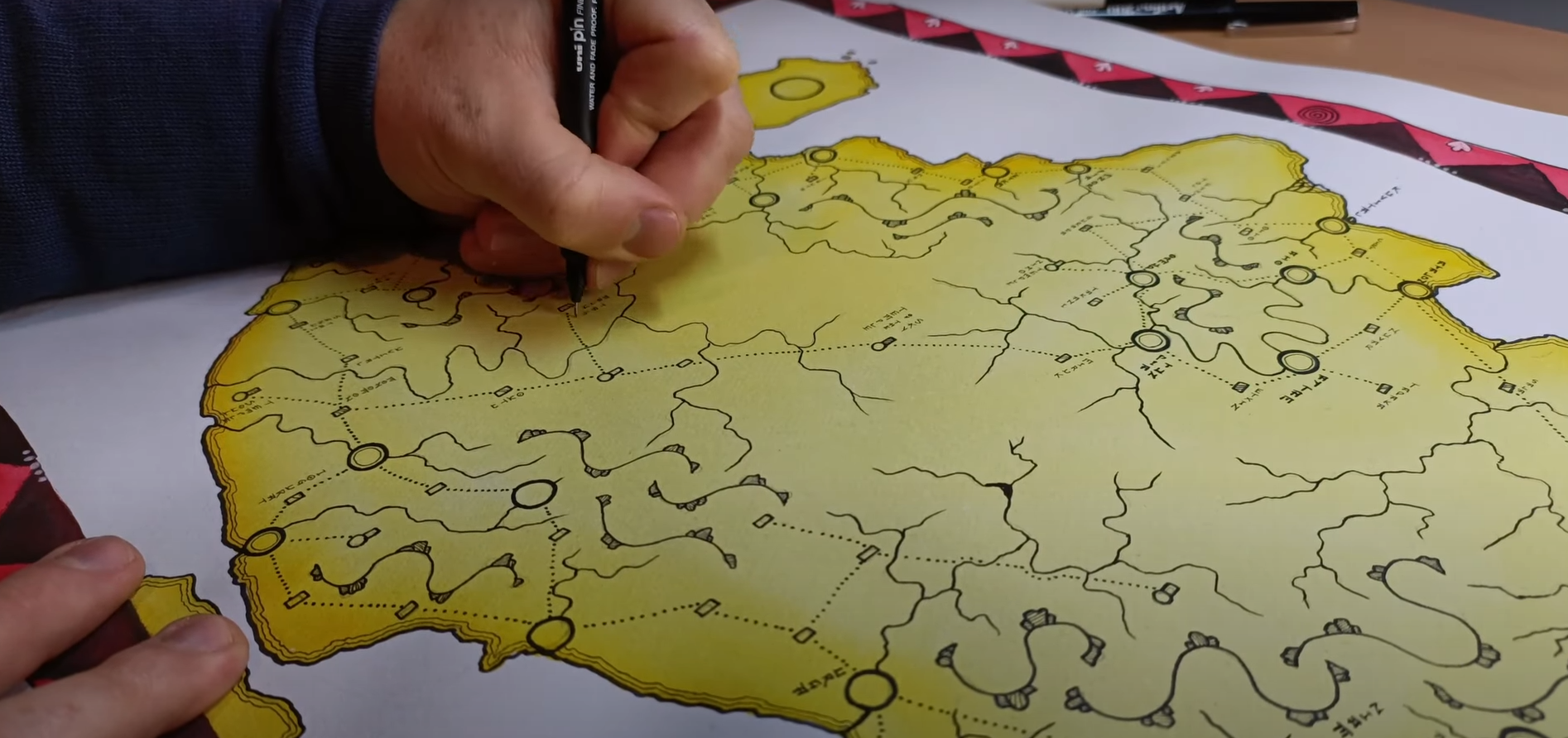
This tutorial is based on the video How to Map like the Han Dynasty from the Red Quills YouTube channel. You can view the main tutorial here.
Beyond the deserts and the steppes, where rivers coil like silver dragons across vast plains, there flourished an empire of silk, bronze, and ink. Merchants and scholars traveled the boundless roads, bearing jade, philosophies, and secrets. In stone libraries and palace halls, geographers unfurled painted scrolls of distant lands, tracing mountains like great teeth and rivers like living veins, seeking not only to measure the world, but to understand the pattern behind it.
Today, we enter the cartographic traditions of the Han Dynasty - and discover how to bring elegance, precision, and hidden meaning into our fantasy maps.
Hello, travelers, and welcome back to the Red Quills! Today, we are venturing far from Rome, to explore a very different mapping tradition - that of ancient China, especially during the Han Dynasty.
We will look at the maps they made, what they cared about, and how we can use those ideas to build fantasy maps that feel vast, interconnected, and full of wonder. As always, I will guide you through a step–by–step process for making your own Han–inspired map excerpt.
You can also check out the downloadable for this week at the Red Quills Patreon.
Or read more tutorials here at the Journal.
Let’s get started.

Why Han Mapping?
If Roman maps were practical and controlling, Han maps were expansive and philosophical.
Mapping was not just about roads or borders - it was about understanding space itself, both physical and cosmic.
In a fantasy world, adopting a Han–inspired mapping style can signal:
- An empire deeply concerned with geography, but also with harmony and balance
- A culture that values rivers, mountains, and natural features as essential parts of political and spiritual life
- An immense, interconnected world where long–distance travel and trade are vital
Today, we are not just making a tool - we are making a work of art that reflects a worldview.
Han Mapping in Action
Let’s take a moment to explore some surviving examples and traditions that shape our understanding of Han–era cartography.
The Mawangdui Maps (circa 2nd century BC)
Unearthed from a tomb in Mawangdui in the 1970s, these silk maps are some of the oldest surviving maps in the world.
- Key Features: Carefully drawn rivers, mountains, roads, and settlements
- Accuracy: Astonishingly precise - for their time, they rival even Roman surveying
- Visual Style: Soft flowing lines, clear labels, balanced composition
Relevance:
A fantasy Han–style map would emphasize water systems, settlements linked by roads, and natural barriers — all integrated gracefully into the design.
Chang Heng's Cosmological Theories (2nd century AD)
Chang Heng was a Han scholar who wrote about cosmic geography - the idea that the Earth was a flat square beneath a spherical heavens–dome.
- Key Features: Emphasis on balance, cardinal directions, centrality
- Relevance: A fantasy setting could mirror these ideas, showing maps that are arranged with symbolic centers and carefully ordered edges.
The Silk Road Influence
Even during the Han, networks like the early Silk Road were forming, encouraging maps that included distant, semi–mythical places.
- Key Features: Awareness of far–off regions, blending known and legendary
- Relevance: Your fantasy maps can hint at vastness by including off–map references to distant kingdoms and wonders.
In Short: Han mapping blends practical information with philosophical ideas about space, balance, and interconnectedness. It makes a world feel grand - and real.

Step–by–Step Han Mapmaking
Now, let’s walk through creating a Han–style fantasy map excerpt.
Step 1: Define the Frame
Han maps often fit into a perfect rectangle - like a scroll or slab - with careful attention to margins and orientation.
Decide early:
- Is this a government map for taxation and control?
- A traveler’s guide?
- A scholar’s exploration of geography and myth?
Each purpose affects what you emphasize.
Visual Tip:
Keep your layout rectangular and well–balanced - avoid sprawling, uneven borders.
Step 2: Draw the Natural Features First
Unlike Roman maps, where roads dominate, Han maps begin with nature.
- Rivers: Long, winding lines, the lifeblood of the land
- Mountains: Stylized ridges, often painted with artistic flair
- Lakes and Seas: Calm pools, usually drawn larger than life
- Forests: Clusters of simple tree symbols
Sketch your rivers flowing from high mountains. Settle your cities on riverbanks or natural crossroads. Think about feng shui - the harmony between landforms.
Small Detail that Matters: Mountain ranges should flow naturally - like waves or folds - not stiff or jagged unless the story demands it.
Step 3: Place Human Features Second
After the land, add humanity.
- Cities and Towns: Simple squares or circles, often named
- Roads: Thin, purposeful lines linking important points
- Fortresses: Rectangles with extra embellishments
- Borders: Dotted or wavy lines rather than harsh divisions
Key Philosophy: Human features fit within the landscape, not on top of it.
Your fantasy map should suggest respect for the natural order, even when empires rise.
Step 4: Use Calligraphy and Labels
Labels matter - they were often added with elegant brushstrokes.
Choose a script–style for your fantasy labels:
- Flowing and vertical? (Reflects Han influence)
- Strong and formal? (Reflects later imperial aesthetics)
Add poetic names when possible: River of Ten Thousand Reeds, White Lotus Mountain, the Southern Gateways.
Audience Engagement Tip:
(Prompt a poll or comment)
"What name sounds most powerful to you for a river - something based on beauty, danger, or mystery? Drop your ideas below!"
Step 5: Embellish with the Distant and the Mythical
At the edges of Han maps, it was common to mark exotic places:
- Lands of golden kings
- Deserts where dragons roam
- Great rivers that disappear into mystery
Leaving room for the unknown can make your map feel limitless.

Storyform Usage In-Game
Let’s step into a game world for a moment.
Your players enter the archives of an ancient imperial court. Inside, they find a scroll map - painted on silk, carefully weighted with jade rods at each end. Across the soft surface, mountains rise like black flames, rivers coil like living creatures, and tiny cities gleam like constellations. At the northern margin, there is a note: “Beyond here, the Sky River vanishes into the Great Waste - no traveler has returned.”
Suddenly, the players hold more than directions - they hold a fragment of history, culture, and the mysteries of the wider world.
Their choices:
- Venture beyond the mapped edges into legend
- Follow river routes to hidden cities forgotten by the dynasty
- Decode ancient warnings written in forgotten scripts
Maps like these are both guides and invitations to wonder.
Storytelling Tip:
When introducing a Han–style map, treat it almost like a magical object. Let players uncover layers of meaning - a detail they missed before, a symbol they misunderstood. Layers build immersion.

Lessons from the Han
Let’s wrap it up.
Today, we learned:
- Han maps balance practical geography with philosophical ideas
- They emphasize natural features first - rivers, mountains, forests
- Human settlements fit into the landscape, not the other way around
- Maps should be framed carefully - rectangular, balanced, harmonious
- Including mythical and distant lands expands the world’s imagination
And most importantly: Maps are more than territory - they are visions of how a people see their place in the universe.
A Han–style fantasy map tells your players that they are part of something vast, ancient, and full of mystery - a world waiting to be discovered, but never fully tamed.
If you found inspiration in today’s journey through ancient cartography, make sure to like the video and subscribe for more worldbuilding tutorials and mapmaking adventures. And if you create a Han–inspired map, I would love to see it - share it on our Discord server, where worldbuilders and artists are trading maps, ideas, and encouragement every day.
Next week, we head into the Mayan civilisation. Until then - may your rivers flow true and your mountains stand tall.