Making My Map Style
This blog post is taken from the transcript of the latest episode from the Red Quills YouTube channel. For more tutorials, you can check out our Journal.
You know, a map isn't just a picture of a place. It’s an argument. It’s a story. For centuries, we’ve used maps to do more than just get from point A to point B. We've used them to understand our spot in the world, to define power, and to tell ourselves who we are. Think about it: a medieval map wasn't really for navigation; it was a map of your relationship with God. A modern map, with all its data and precision, argues for a world that we can understand through science.
But the maps we create for our own worlds - for our stories, our D&D games, our private universes - they have to do both. They need to be a tool and a treasure, a guide and a gateway. Today, I’m not just going to show you how to draw a map. I'm going to show you how to breathe a soul into a blank sheet of paper, to turn it into an artifact from a world that feels like it exists just out of reach.
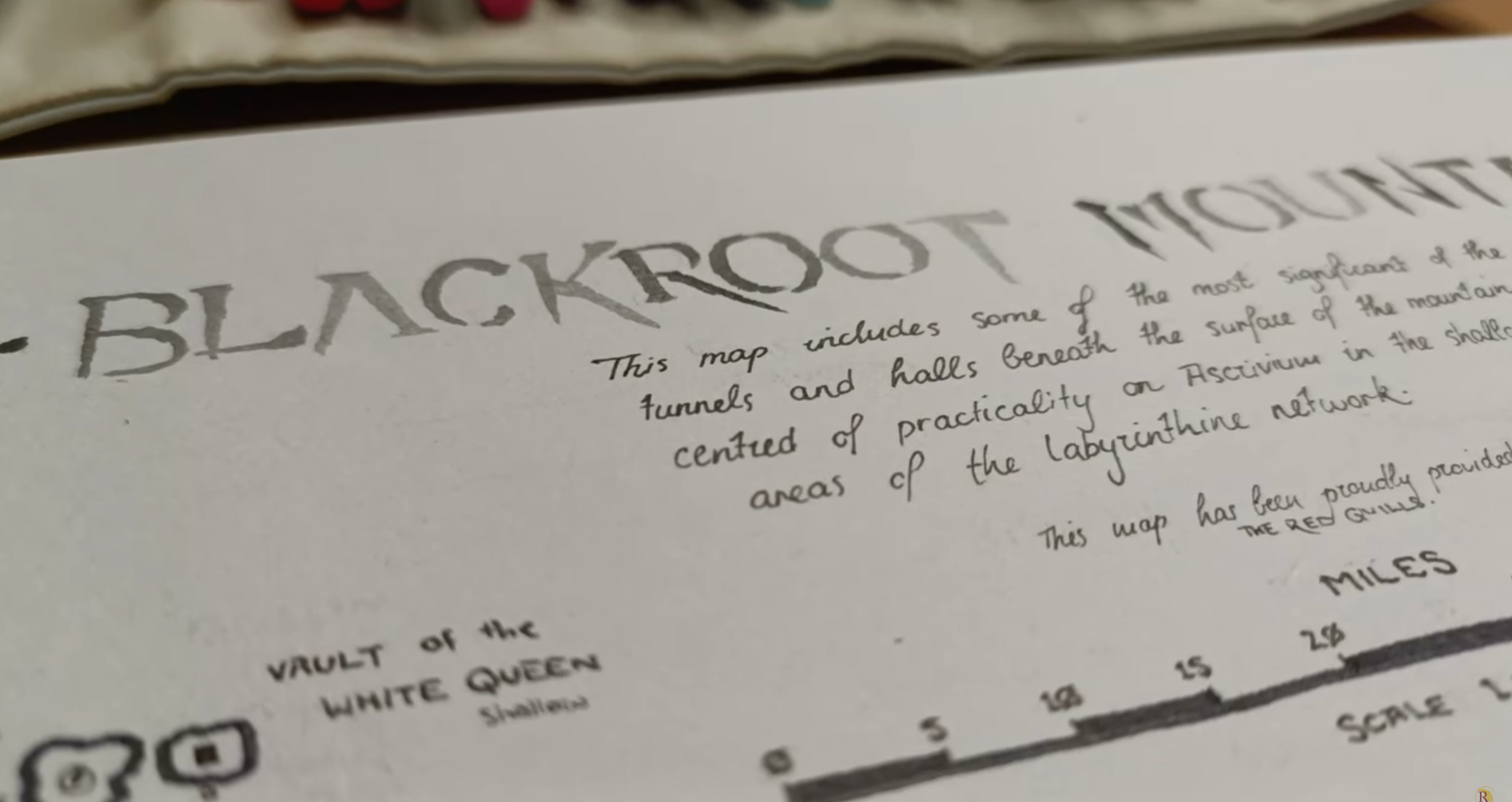
I'm going to walk you through my personal method, a style I've worked on for years that blends artistic, evocative inking with dense, practical detail. The goal is to create a map that's both a piece of art you'd want to hang on your wall and a functional tool that makes your world feel real and alive. Today, we'll be tackling a commissioned map of a section of the Underdark called "Blackroot Mountain" - a subterranean world of interconnected caverns, underground lakes, and lost drow cities. We're not just drawing lines here; we're finding that perfect balance between what looks beautiful and what actually works.
The whole process is a journey in three parts. First, we'll lay the groundwork with a pencil sketch, where we figure out the big story of our landscape and what our map is actually for. For this project, it's for a client's tabletop campaign. Second, we'll bring it all to life with ink, focusing on techniques that create texture, depth, and character. That’s where the art really happens. And finally, we'll layer in the function - the tiny labels, the cool symbols, and all the little details that make a map genuinely useful and believable.
Before we start, let's talk tools. You don't need a professional studio, but the right tools make a huge difference. I suggest getting some good, heavy paper, like watercolor paper that won’t let ink bleed everywhere. You'll need a pencil for the sketch - a hard lead is best because the lines are lighter and easier to get rid of later. And for the soul of the map: the ink. I use a set of fine-tipped pigment ink pens, in a bunch of different sizes. Having different line weights is totally non-negotiable for this style; it's how we create visual hierarchy and depth. Oh, and a good eraser that doesn't smudge will be your best friend. With just these simple tools, we're ready to go. We're ready to make not just a map, but a world.

The Foundation - The Pencil Sketch
The blank page. It can be a little intimidating, right? So much empty space. Our first job is to tame it, to give it some structure and a purpose. This sketching phase is honestly the most important part of the whole process. A mistake with ink can become a happy accident, but a mistake in the basic layout is a flaw you can't really fix.
First things first: who is this map for, and what does it need to say? For this guide, we're making a map of Blackroot Mountain for a Dungeons & Dragons campaign. It needs to show a massive, multi-levelled cavern system. Not a whole world, just one focused area. That decision alone gives us our star of the show. We’ll place the main, largest caverns right in the middle of the page, letting them own the composition. That way, anyone looking at it knows immediately what’s important.
Now, let's actually create the land - or, in this case, the lack of it. Forget trying to draw a perfect, clean outline. Real caverns are fractal, chaotic, and messy. We want to copy that. One of my favorite tricks for a natural-looking cavern system is to use a little bit of controlled chaos. You're not just drawing a line; you're discovering a space that's been carved by eons of water or cataclysmic magic. Take your time with it. Go back with your eraser and carve out new tunnels. Add a cool-looking rock pillar here, a collapsed passage there. This is your first layer of storytelling. That large, open cavern? Maybe it becomes the site of a lost city. That cluster of tight tunnels? A perfect lair for subterranean predators.
With our main caverns set, it's time to add the bones of this world: the massive rock formations and pillars. These are never random; they're the parts of the earth left behind. We don't need a geology degree, but we should think logically. When you decide where your pillars go, you're deciding where tunnels will go, where settlements will be built for support, and where danger might hide.
So, let's draw those underground rivers. The golden rule here is simple: water flows downhill. It always takes the path of least resistance. Your rivers should start from higher-level sources and flow down into subterranean lakes or disappear into deeper fissures. They should meander and snake, joining up with other streams to get bigger as they go. A river should never split on its way to its destination. It can break into a delta right as it enters a lake, sure, but it doesn't just fork into two equally large rivers. That’s not how physics works. Draw single, confident lines for your rivers, from high ground to low ground.
Finally, in this pencil phase, let's think about hidden forests and other big biomes. Look at your pillars and rivers. Where would life thrive? A vast cavern with a water source might be home to a sprawling fungal forest. A secluded, damp area could host a field of bioluminescent flora. Lightly sketch the general shapes of these unique biomes. Don’t draw individual mushrooms yet, just the general outline of the area. Think in big, sweeping shapes.
Before you even think about picking up a pen, take a look at your pencil sketch. It should be a ghost of the final map. You've made the big calls. You've told the geological story of this place. You've set up a clear visual hierarchy. You’ve turned a blank page from a void into a place. Now, and only now, are we ready to make it permanent. Now, we ink.

The Art - Evocative Inking
This is the part where the map gets its soul. Our goal here is what I call "evocative inking." This means we're not just tracing our pencil lines; we're interpreting them. Every single touch of the pen should add texture, depth, and character. This is that sweet spot between art and information that makes a map special. We're going to use different line thicknesses - or line weights - to communicate information and create that visual hierarchy. This is probably the single most important technique I can teach you. Thicker lines mean "look here, this is important!" Thinner lines are for the finer details.
Let's start with the cavern walls, the border between open space and solid rock. This is a place of texture and shadow, and our ink should show that. Grab a medium-thick pen, maybe a 0.3mm or 0.5mm. Trace your penciled cavern outline, but don't just draw one smooth line. Rough it up. Stutter your pen, create little jags and breaks. Go over the line again in some places to make it thicker, suggesting rugged, unworked stone. Then, to add some texture, draw a second, much finer line (with a 0.1mm or 0.05mm pen) just inside the first one, loosely following the curves. This simple trick creates an immediate sense of depth. If you want even more texture, you can add tiny, fine dots along the base of the walls to show rubble or scree. This is called stippling, and it's a fantastic way to build up tone.
Now for the great pillars and rock formations. This is where we can get really artistic. Whatever you do, don't just draw a bunch of identical cylinders. That looks boring and fake. Instead, we're going to build rock formations that feel huge and ancient. Start with your thickest pen, maybe an 0.8mm. For the main pillars, draw bold, jagged outlines. Then, switch to a thinner pen for connecting ridges or smaller rocky outcrops. The key to making them look 3D is shadow. Pick a light source - I usually imagine it's the ambient glow of the cavern itself, coming from the top left or top right. On the side of the pillars opposite the light, add dense lines. You can use hatching - a bunch of parallel lines - or cross-hatching, where lines cross over each other. These dark, dense lines create the illusion of shadow and give the pillars real weight. Let the lines follow the curve of the rock. On the side facing the light, use very few lines, or even none at all. This contrast is what makes the formations pop.
Next up, fungal forests. A fungal forest isn't just a bunch of mushrooms; it's a single, textured mass. That's how we'll draw it. First, take a medium pen and ink the outline you sketched. Make the edge irregular and bumpy, kind of like the top of a cloud, to suggest a canopy of mushroom caps. Now, to fill this shape, we'll use texture. You could stipple the whole area, packing the dots more densely at the edges to create a shadow. My favorite method, though, is to draw short, vertical lines straight down from the "canopy" edge into the forest floor. This simple trick gives the forest texture and the illusion of depth, like you're seeing the dark stems under the caps. You don’t even have to fill the whole shape; leaving some blank space inside can make it feel more natural. I like to sprinkle a few individual mushroom symbols around the edges to soften the border and show the biome thinning out.
Rivers and lakes are next. The thickness of the line you use for a river should tell you how big it is. Use a medium pen for your biggest, most important underground rivers. As you move upstream to the smaller streams, switch to a finer pen. This instantly tells the viewer which rivers are the major ones. The line itself should be confident, but don't worry about it being perfectly smooth. Let it waver a bit.
As you're doing all this, you're constantly making choices. Your cavern walls and major pillars should be the boldest things on the page. Your fungal forests and major rivers are the next level down. The finest lines are for the smallest details, like feeder streams and tight tunnels. This variety is what separates a flat, boring drawing from a dynamic, informative map. It guides your eye and tells a story.
Now, step back and look at your inked map. The pencil lines are gone. What's left is a stark, black-and-white world, full of texture and life. It should already feel like an artifact. It has weight. It has history. But it's still an empty world. It doesn't have people. In the next step, we'll fix that. We’ll add the stories, names, and paths that turn a landscape into a home.

The Function - Details and Data
Our map is now a beautiful piece of art, but art alone isn't enough. We need to add the data that makes it a useful tool for storytelling or worldbuilding. This is where we add cities, outposts, tunnels, and labels. The trick is to do it without making our beautiful ink work look cluttered. It's all about balancing art with readability.
Let's start with symbols. We need a consistent visual language. Create a small set of symbols for your settlements. A simple filled square or circle could be a small mining outpost. A larger town might get a larger circle with a dot in it. A major drow city could have a more complex symbol, like a cluster of shapes or a stylized spiderweb. The key is consistency and hierarchy - the bigger and more important the place, the bigger and more complex the symbol. And place them in logical spots! Cities pop up in large, defensible caverns, near a fresh water source, or at the junction of major tunnels. Think about the story of your world as you place each one.
Once your settlements are down, it's time for the most delicate and, let's be honest, often the most frustrating part: labeling. Typography is a whole art form in itself. The fonts you pick have a huge impact. I suggest picking two fonts at most: a classier serif font for big features like cavern names and underground seas, and a clean, simple sans-serif font for smaller things like cities and outposts.
The real secret to good labeling is writing incredibly small and being patient. Use your finest pen, a 0.05mm if you've got one. Write horizontally whenever you can. For things like rivers or winding tunnels, the label should follow the curve of the feature. This is tricky and takes practice. Seriously, practice on a scrap piece of paper first. The goal is for the label to feel like it's part of the map, not just slapped on top. If an area is getting too crowded, don't try to cram the labels in. Instead, put a little number next to the feature and write the name in the margin or in a key.
Now, let's connect our world with tunnels and passages. These are rarely straight lines. They curve around massive pillars and follow natural fissures. Use a fine pen to draw them. A simple, thin, solid line can be a major, well-traveled tunnel. For a smaller passage or a dangerous crawlway, use a dashed or dotted line. This simple difference instantly tells you what kind of path you're looking at.
This brings us to one of my favorite parts of this style: insets and annotated borders. The main map area is sacred; we want to keep it as clean as we can. The corners and edges are where we can pack in extra info. In one corner, you could draw a little inset map - a zoomed-in view of the lost drow city, for example. In another corner, you could draw a cool side-view of a giant pillar or a unique creature.
The borders of the map are your space for notes. This is where you put your key, explaining what all the symbols mean. It's also where you can add historical facts or little bits of lore. You could have a note about an ancient battle that happened in a cavern, or a mythical beast that lairs in a specific tunnel system. These little notes add so much flavor and turn the map from a drawing into a historical document.
Finally, add the last little flourishes. A decorative compass rose is a classic touch, though for an Underdark map, maybe it shows directions to known safe havens instead of North. A scale bar is super important for making the map actually useful for measuring distance. And of course, give your map a title, perhaps "A Map of Blackroot Mountain," inside an elegant banner. These final bits frame the map and complete its transformation.

There We Have It!
Alright, let's take a final look at what we've made. We started with nothing more than a blank page. We gave our world a foundation, a story written in faint pencil lines. We excavated vast caverns, we left behind colossal stone pillars, and we made the big decisions that would shape everything.
Then, we brought that sunless world to life with ink. We committed. We used different line weights to create shadow and depth, turning simple outlines into rugged rock formations and dense fungal forests. We made the act of tracing an act of art, giving our map a unique soul.
Finally, we populated our world. We layered in the details that turn a dark landscape into a home. We placed lost cities, we gave them names, and we connected them with tunnels. We created a clear, functional language of symbols and labels. We used the very edges of the paper to add layers of lore and data, enriching our map with context.
From a blank page to a living world. Every single mark on this paper now has a purpose. It's a map that is both a beautiful piece of art and a practical tool. You can hang it on your wall, but you can also use it to plan a story or run a game. It's a document that begs to be explored, that sparks the imagination, and argues for the existence of a world that feels just as real as our own.
But the journey doesn't end here. This is just the beginning. I've shown you my style, but the most exciting part is seeing what you do with it. The real magic of map-making is that it’s an intensely personal thing. Every map is a self-portrait of its creator's imagination.
So I really encourage you: take these techniques and make them your own. Create your own unique location. Tell its story. Don't be afraid to experiment, to mess up, and to discover your own unique style. The best way to learn is by doing, so grab your pens and start drawing. And when you do, please share your creations! I would absolutely love to see the worlds you bring to life.
If you found this guide helpful, and you want to see more deep dives into map-making and world-building, please consider liking this video and subscribing to the channel. Your support lets me make more content like this, and it helps our community of creators grow. Let me know in the comments what you'd like to see next. Maybe a guide to city maps, or a tutorial on a completely different style?
Thanks for joining me on this journey. Now go forth, and map your worlds.