

Turning Your SKETCH Into a City!
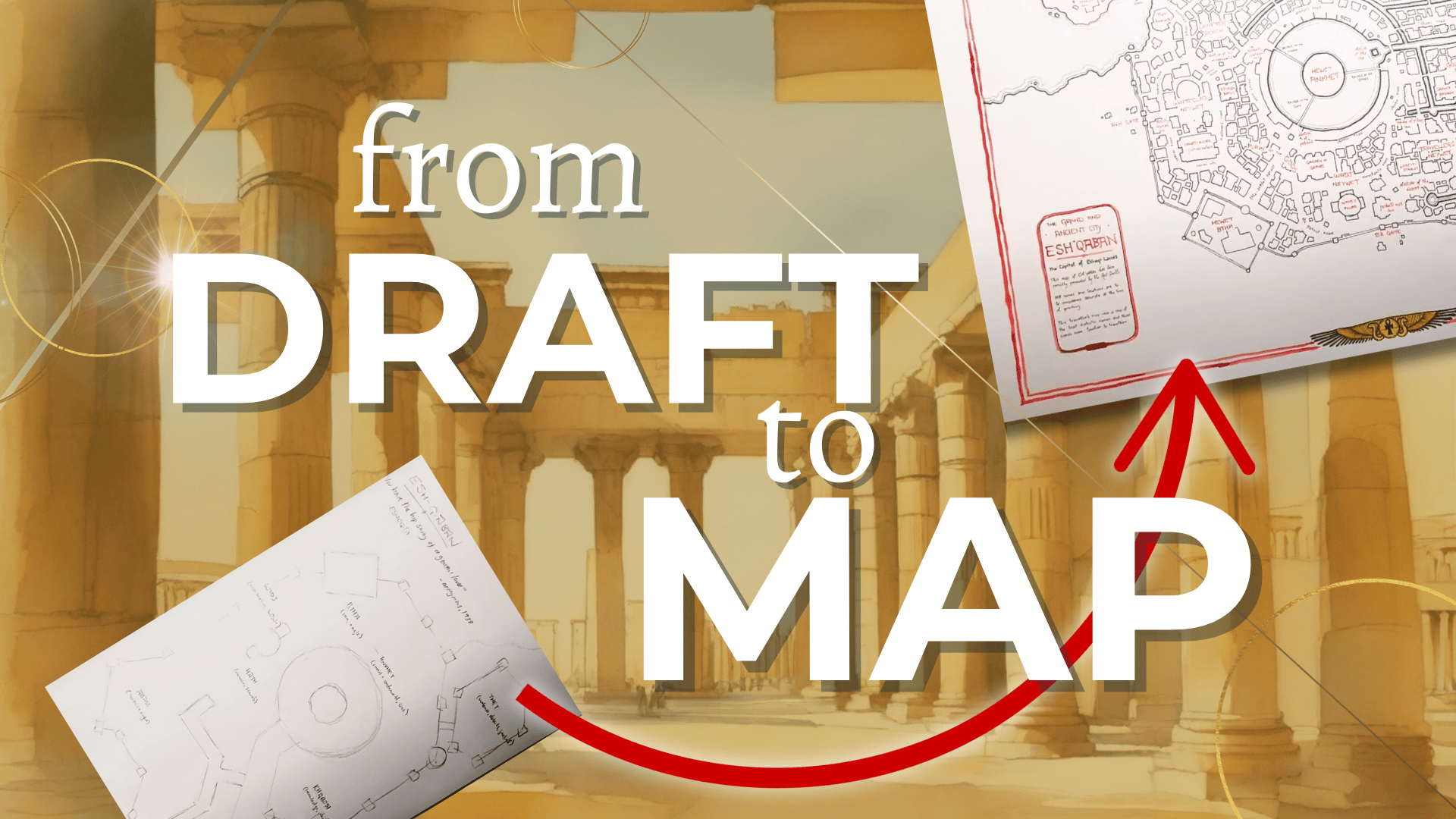
Welcome to "The Red Quills!" Today, we begin our new series on creating urban maps for fantasy settings. We'll start with a novice-friendly approach: transforming a rough pencil sketch into a fully realized city map. We'll go through the step-by-step approach to turning your sketch into a city.
In this episode, we'll bring the ancient city of Esh'Qaban to life—an Egyptian-inspired metropolis, filled with bustling markets, grand temples, and narrow alleyways. You’ll learn how to take a basic sketch, like this one, and turn it into a rich, evocative city map.
We’ll discuss the foundational concepts of city design, creative ways to generate content, and even some tips for naming your city to match its cultural inspiration. As always, I’ll be drawing everything by hand, with a visual overlay on the screen so you can follow along.
If you prefer to watch these tutorials on our YouTube channel, you can find it here: Turning your Sketch into a City
Or, download the full A2 version of this map on our Patreon:
We keep a full list of tutorials, maps, and concept sketches here on the Red Quills Journal, all free to read and peruse. If you want to check them out, click here.
Let’s get started!

Understanding the Sketch
Interpreting Rough Sketches
A pencil sketch is more than just lines on paper; it’s the skeleton of your city. Start by identifying the main shapes—these could be the rough outlines of city walls, the flow of a river, or the spaces for larger buildings like palaces or temples.
Look for areas that can serve as natural hubs. In Esh'Qaban, the central, circular dock is our main hub, inspired by the harbor of ancient Carthage. The dock will not only serve as a focal point for trade and commerce but also as a place where stories begin.
Think of your sketch as a story in itself, waiting to be told. What do the shapes suggest? Are there areas that lend themselves to bustling markets or quieter residential zones?
Identifying Key City Elements
Once you have a sense of your sketch’s primary shapes, begin to identify key elements. For Esh'Qaban, these might include the towering lighthouse, inspired by the famous Pharos of Alexandria, which serves both as a landmark and a symbol of the city’s wealth and knowledge.
Think about how these elements interact. The circular dock feeds into the main marketplace, while the lighthouse serves as a beacon, guiding ships safely to port. Other elements might include grand temples, bustling souks, and hidden sanctuaries, each adding depth to your map.
Establishing a Sense of Scale
Scale is crucial. Decide how large your city is and what each element represents. Use landmarks like walls or major streets to provide a reference. If you’re not sure, use a simple measure like the distance between the lighthouse and the central market. How many houses would fit along that route? Does the city feel sprawling or dense?
Keep these questions in mind as you refine your sketch into something more detailed.

From Sketch to Structure
Defining City Layouts
Begin by laying out your streets, plazas, and public spaces. In Esh'Qaban, the circular dock radiates outward like spokes on a wheel, leading to various districts. The design should feel organic, shaped by both purpose and history.
Think about how people move within the city—are there main thoroughfares that connect important landmarks, or is the layout more chaotic, reflecting the growth of a city over time?
Integrating Natural Features
Incorporate natural features like rivers, hills, and coastlines into your design. Esh'Qaban sits on the banks of a great river, with the lighthouse standing tall on an outcropping that juts into the water. Consider how these features affect the city’s growth and layout.
Natural barriers can create unique neighborhoods or districts. A river might separate the wealthy from the poor, or a hill could host the temples of the gods, looking down on the rest of the city.
Developing Districts and Zones
Now, think about the different zones within your city. For Esh'Qaban, I’ve separated the city into several districts: the Dockside Market, the Temple Quarter dedicated to Hewett, and the Noble District, where the elite dwell. Each district has its own character and purpose.
Consider the needs of your inhabitants: where do they live, work, and worship? What are the cultural or social divides within the city? This is where your map starts to breathe, becoming more than just a layout.

Adding Details and Content
Creating Points of Interest
Start adding unique locations that make your city memorable. In Esh'Qaban, this might include the Grand Bazaar near the docks, where traders from across the world gather. Or the Library of Nuwat, a great repository of knowledge perched beside the lighthouse.
Think about places that provide opportunities for stories and quests—hidden tombs, secretive guild halls, or mysterious shrines. Each of these points can serve as a setting for adventures or as plot hooks for your players.
Crafting Stories and Secrets
Maps are storytelling tools. Use them to hint at secrets or hidden narratives. In Esh'Qaban, the narrow alleyways and shaded courtyards may conceal conspiracies, ancient cults, or lost relics.
Imagine who lives in these places and what stories they might have. Create layers of mystery that invite exploration. Every corner could hold a clue or a surprise that brings your city to life.
If you’re enjoying the content and want to support "The Red Quills," consider joining our YouTube membership or becoming a patron on Patreon! You'll gain access to exclusive content, downloadable maps like the one we’re creating today, and more behind-the-scenes insights into my creative process. Your support helps me keep bringing new and exciting content to you every week!
Naming the City
Names carry weight and history. Use names that feel authentic to your city’s culture. In Esh'Qaban, I’ve drawn on old Egyptian words—like Hewett, meaning ‘temple’—to reflect its heritage. You could also use the names of deities, famous figures, or natural elements.
Try to be consistent with your naming conventions to create a sense of unity. Names can also tell stories of their own—think of a district named "The Weeping Gardens," which could suggest a tragic past or a mysterious curse.

Case Study: Esh'Qaban
Analyzing Esh'Qaban's Unique Features
Let’s look closer at Esh'Qaban and what makes it special. The circular dock serves as a trading hub and a point of entry, echoing the harbor of Carthage. The lighthouse not only helps ships navigate but also symbolizes the city’s connection to the ancient gods of the sea and knowledge.
Think about how these features tie into your city’s identity. Every element should feel like it belongs and serves a purpose.
Expanding on Cultural Influence
The design of Esh'Qaban is heavily influenced by its culture and history. The Temple Quarter, dedicated to the goddess Nuwat, is filled with grand columns and courtyards, where rituals and festivals are held. Consider how culture and religion influence your city’s layout and design.
Elements like art, architecture, and city planning should reflect the beliefs, values, and history of its people.
Bringing the Map to Life
Finally, bring everything together with color, texture, and detail. Add layers of activity to your city—the boats in the harbor, the people in the marketplace, the priests in the temple. The more you can visualize life within your city, the more alive it will feel to your players.
Consider adding color to differentiate districts or to highlight areas of importance. Use shading to show depth and light to draw attention to key areas.

And there you have it! From a simple sketch to a fully realized city map, Esh'Qaban is now ready to be explored. Remember, the map is just the beginning; it’s a canvas upon which stories will unfold and adventures will begin.
In our next episode, we’ll be diving into “Making your D&D City Fantastic,” where we’ll look at creating Anchor, a city on the back of a star-swimming turtle. We’ll discuss how to make your cities truly fantastical while balancing them with practicality and engaging gameplay.
Until then, keep those pencils sharp and your imaginations sharper. See you next time on "The Red Quills!